 3LYNX
3LYNX · Industrial simulation
Understand the system. Understand the decision.
Everything works. Until it works together. In complex systems changing one thing never changes just one thing. 3LYNX makes the interactions, dependencies and knock-on effects in industrial systems visible – for decisions that put your business on course for success.
Video description
Lots move from release through cutting, machining, assembly and inspection to the customer. Then demand rises and a queue builds up in front of assembly. In the last phase a second assembly station is added, the queue shrinks and the flow recovers. The video has no sound.
No performance without FLOW
The newest technology. The most advanced machines. They mean nothing if the system doesn’t flow.
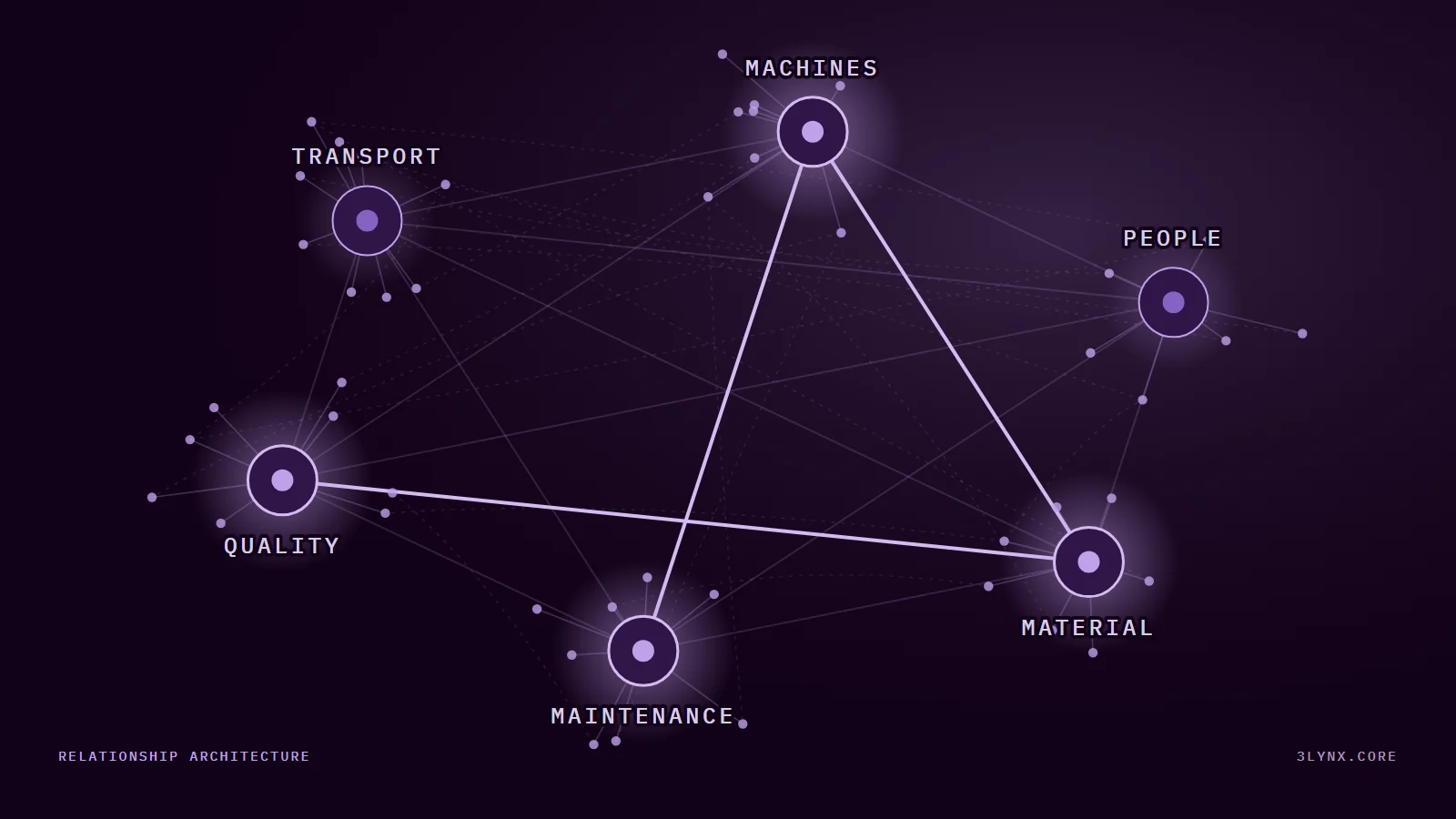
Relationships matter. In life. In business. And especially in complex industrial systems. Capacity, material flow, workforce, maintenance and quality events are all connected. These relationships shape how the system behaves – and ultimately determine the real impact of a decision.
System
See the system
Technology does not operate in isolation.
Relationships
Understand the relationships
Outcomes emerge from interactions across the system.
Decisions
Explore the implications
Understand trade-offs before committing.
Make the invisible decision-relevant
We call this Relationship Architecture.
Complex operating systems are defined by relationships. Understanding those relationships is critical to understanding the consequences of change. 3LYNX identifies and structures the relationships that matter for the decision at hand – across technology, processes, resources, capacity, risk and economics.
- Decision-relevant insights. We translate system understanding and scenario results into a clear basis for decision making – including implications, trade-offs and risks.
- Explore alternative scenarios. Compare options and explore how changes propagate through the system before committing to a course of action.
Our tools
Two tools, one way of thinking.

3LYNX.CORE · Simulation engine
See how your system behaves before you change it.
Simulation of production and intralogistics over time: machines, people, tools, buffers, transport and quality events.
3LYNX.CORE →
3LYNX.VSM · Value stream design
Draw the value stream. Watch it run.
Value stream mapping in the browser, with live figures and a simulation with 3LYNX.CORE in one click.
3LYNX.VSM →Stepwise modelling
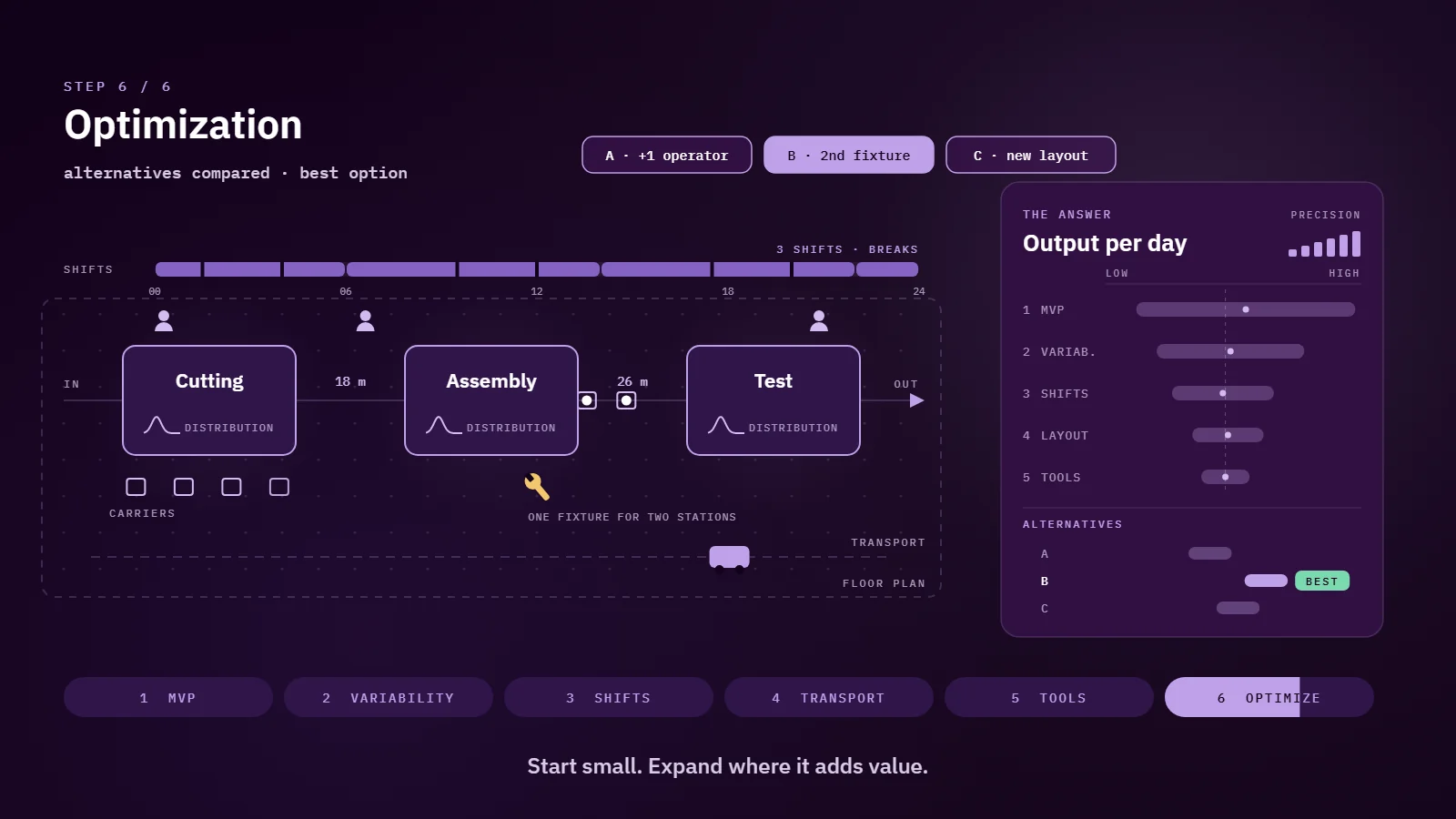
Start small. Expand where it adds value.
A first model does not need a data project. A few stations, average times and one shift are enough for a first answer. From there the model grows step by step, only where the decision needs it.
Where simulation pays off
Examples from production and logistics.
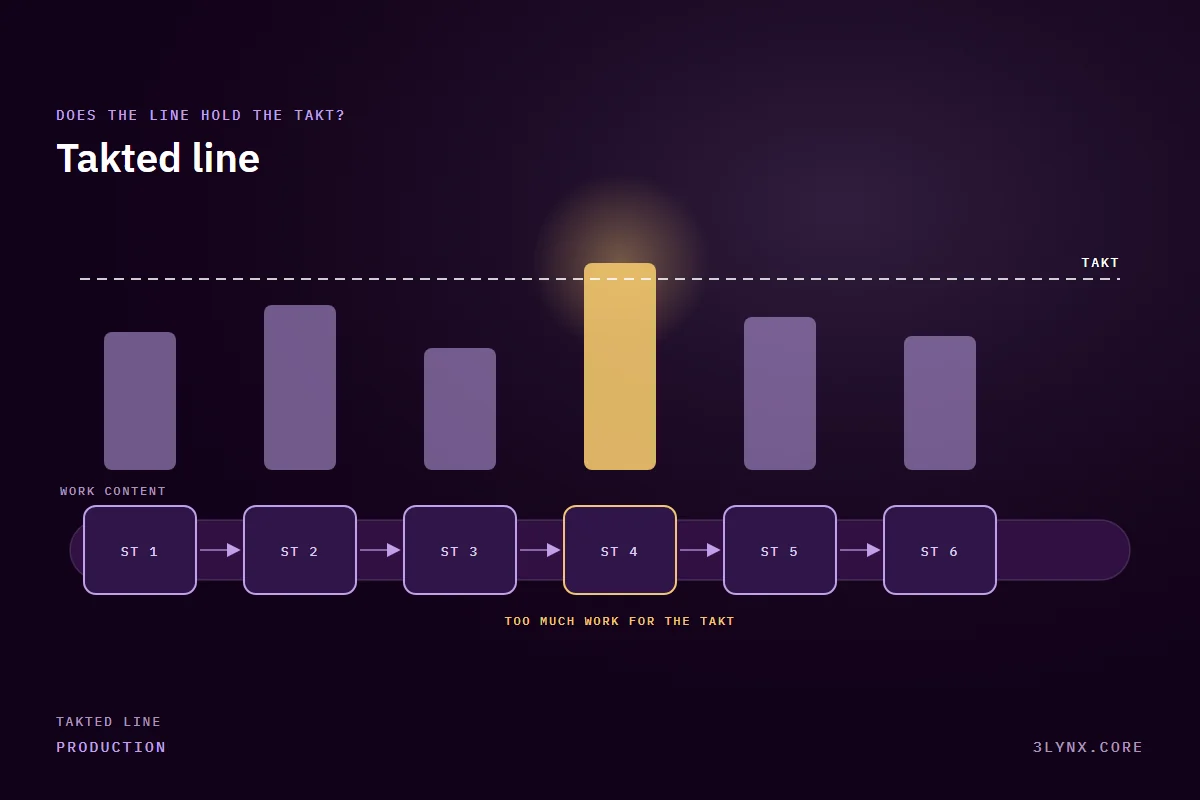
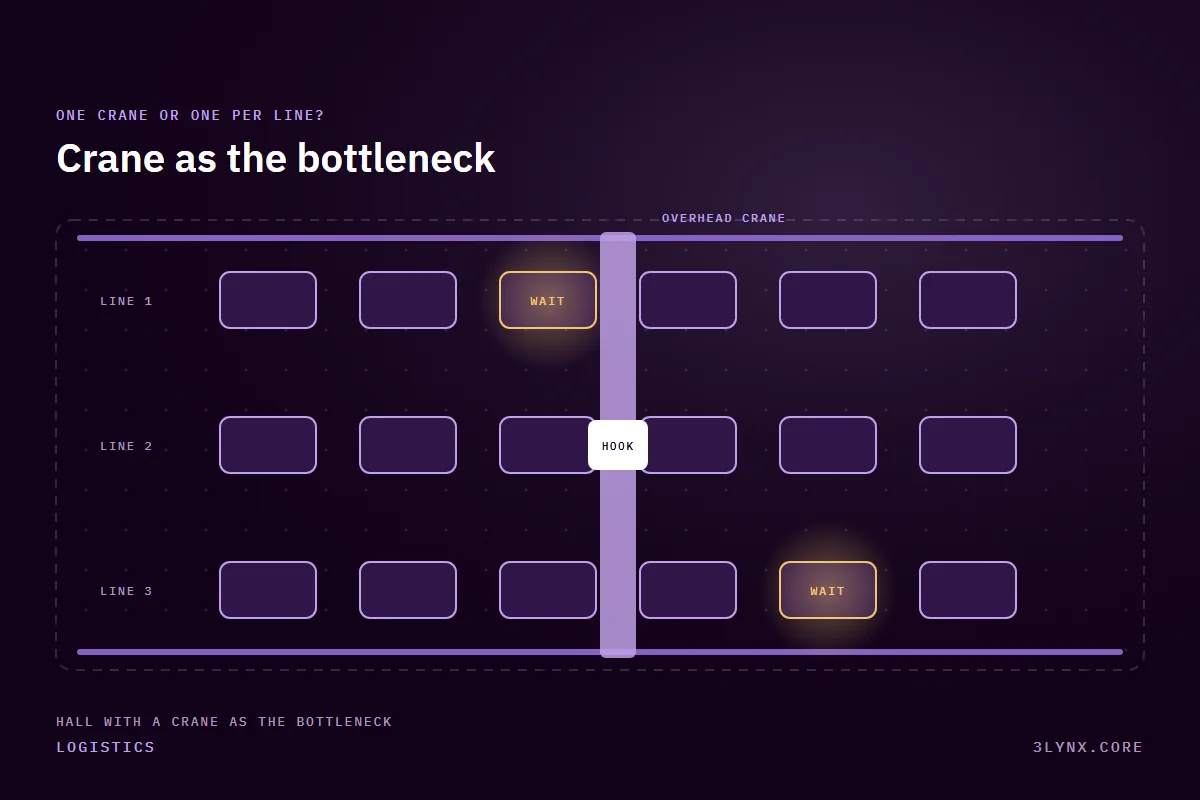
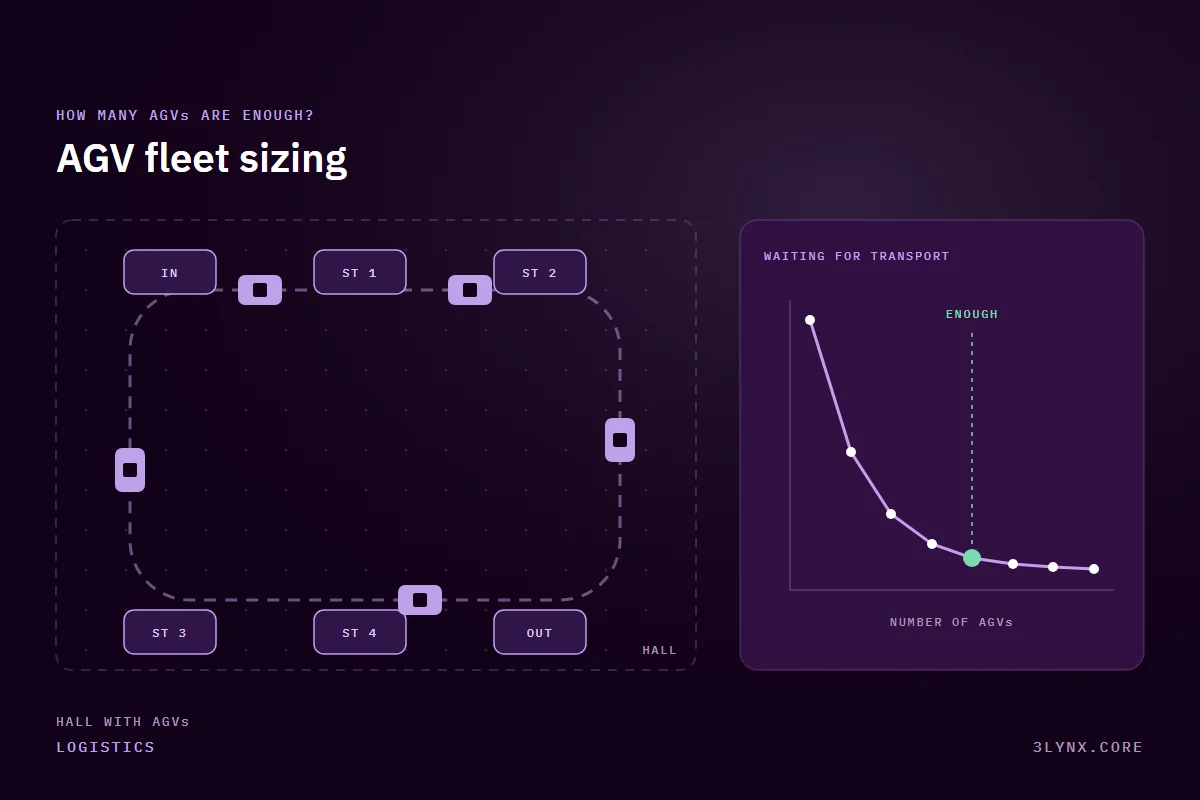
Batches and buffers, large components, takted lines, cranes, AGV fleets and transports on the site.
Follow the Lynx
Understand the system. Understand the decision.
Tell us about the decision in front of you. We start small, with the relationships that matter.